
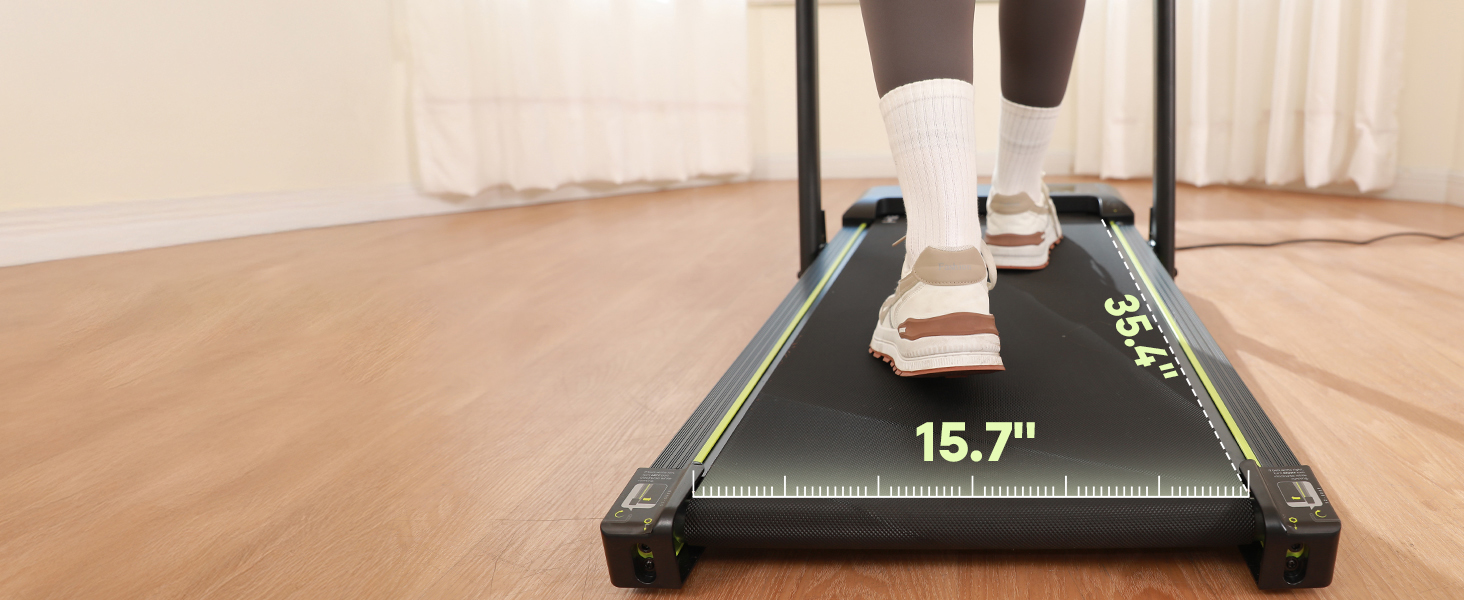
Thinking about getting a walking pad treadmill—or already have one quietly sitting under your desk? You’re probably wondering: how long will this thing actually last before it turns into an expensive floor decoration?
The answer isn’t one-size-fits-all. Like most fitness equipment, lifespan depends on how you use it, how well you treat it, and whether you occasionally remember to clean it (we won’t judge if you don’t).
Average Lifespan of a Walking Pad Treadmill
Most home-use walking pad treadmills are designed to last 5–10 years under normal conditions.
That range assumes:
-
Moderate use (a few times per week)
-
Proper maintenance (yes, that matters)
-
No extreme stress (sorry, daily sprint marathons don’t count)
Compared to full-size treadmills, walking pads are more compact and lightweight, which is great for your living space—but it also means some components may wear faster if pushed beyond their intended use.
That said, a well-built walking pad with a reliable motor and shock absorption system can absolutely hold up for years—especially if you’re using it for walking or light jogging.
What Actually Affects Lifespan?
Here’s where things get interesting. The lifespan of your treadmill isn’t random—it’s shaped by a few key factors.
1. Motor Power (Yes, It Matters More Than You Think)
The motor is basically the heart of your treadmill.
A 2.5HP motor, for example, strikes a nice balance:
-
Strong enough for daily walking and light jogging
-
Efficient enough to avoid overheating
-
Quiet enough to not annoy your coworkers on Zoom
Brushless motors (the quieter, more modern kind) also tend to last longer because they generate less friction internally.
But here’s the catch:
Even a great motor won’t last if you constantly push it to its limits.
2. How You Actually Use It
Be honest—are you:
-
Casually walking while answering emails?
-
Power walking like you’re late for a flight?
-
Or attempting Olympic-level sprints on a walking pad?
Different usage = different wear levels.
Low-impact walking
-
Minimal stress on motor and belt
-
Can significantly extend lifespan
Daily moderate workouts
-
Normal wear and tear
-
Totally fine with proper maintenance
High-intensity running (not recommended for compact models)
-
Faster wear on motor, belt, and frame
-
Shortens lifespan noticeably
Walking pads are built for consistency, not punishment.
3. Incline Usage (The Sneaky Wear Factor)
Incline is fantastic for burning calories—but it also increases workload.
A manual 10% incline:
-
Adds intensity without needing a bigger motor
-
Targets leg muscles more effectively
-
Increases resistance → slightly more strain on components
Used occasionally, it’s great.
Used constantly at max incline? Your treadmill will definitely feel it over time.
4. Cushioning and Impact Protection
Here’s something people overlook: shock absorption isn’t just for your knees—it’s for your treadmill too.
A system with:
-
Multi-layer belts
-
Silicone shock absorbers
…reduces impact from every step, which means:
-
Less stress on internal parts
-
Slower wear over time
Bonus: your joints will thank you.
5. User Weight and Load Capacity
Every treadmill has a limit—and it’s not just a suggestion.
For example, a 265 lbs capacity machine is designed to:
-
Handle regular use within that range
-
Maintain motor efficiency without strain
Consistently exceeding that limit (or getting close to it with intense workouts) can:
-
Overwork the motor
-
Wear down the belt faster
6. Storage and Environment
Your treadmill’s worst enemies:
-
Dust
-
Humidity
-
Pet hair (seriously, it gets everywhere)
If you’re storing it under a bed or sofa (which is kind of the point), make sure:
-
It stays dry
-
It’s occasionally cleaned
-
It’s not collecting a small ecosystem underneath
Lifespan by Usage Type
Let’s put things into real-life scenarios.
🧑💻 Under Desk Walking (Light Use)
-
30–60 minutes per day
-
Low speed
-
Minimal incline
Expected lifespan: 7–10 years
This is the sweet spot for walking pads.
🚶 Regular Home Workouts
-
3–5 times per week
-
Moderate pace
-
Occasional incline
Expected lifespan: 5–8 years
Still very solid—just keep up with maintenance.
🏃 “I Treat This Like a Gym Treadmill”
-
Daily use
-
High speeds
-
Frequent incline
Expected lifespan: 3–5 years
Also: your walking pad is quietly asking you to stop.
How to Make Your Treadmill Last Longer
You don’t need to be a technician—just don’t ignore it completely.
Simple habits that actually work:
-
Keep it clean
Dust buildup can mess with the motor over time -
Lubricate the belt
Reduces friction and keeps everything running smoothly -
Check alignment
A drifting belt = uneven wear -
Listen for weird noises
Your treadmill will complain before it breaks -
Use it as intended
Walking pad ≠ sprint machine
Think of it like a car: a little maintenance goes a long way.
Signs It Might Be Time for a Replacement
Even the best treadmill won’t last forever.
Watch for:
-
Jerky or inconsistent speed
-
Loud or unusual noises
-
Belt slipping or visible wear
-
Display or control issues
If multiple problems show up at once, repair costs might not be worth it.
Why Modern Walking Pads Are Built to Last (If You Use Them Right)
Today’s compact treadmills are smarter than they used to be.
Features like:
-
Quiet brushless motors
-
Shock-absorbing belt systems
-
Adjustable handlebars for stability
-
Compact, space-saving frames
…make them ideal for consistent, everyday use.
A well-designed walking pad treadmill with:
-
A 2.5HP motor
-
10% incline capability
-
multi-layer cushioning
-
compact, under-desk design
…isn’t trying to replace a commercial gym machine—it’s built to fit into your life and stay there.
Final Thoughts
So, how long does a walking pad treadmill last?
Short answer:
Anywhere from 5 to 10 years, depending on how you treat it.
Honest answer:
It’ll last a long time—if you don’t try to turn it into something it’s not.
Use it consistently, maintain it occasionally, and respect its limits—and it’ll quietly do its job while you rack up steps, burn calories, and maybe even answer emails at the same time.
Not bad for something that fits under your couch.